
 Written by Farrukh Shahzad · September 17, 2026
Millions of people from around the world have built their careers in the UAE. Tax-free salaries, modern cities, safety, global connectivity and a multicultural lifestyle make it one of the most popular destinations for expatriate professionals. But what is it really like working in the UAE, and what should you know before you move?
This guide covers the benefits of working in the UAE, typical salaries and allowances, employee rights, working hours, work culture and practical tips for settling in.
Key benefits of working in the UAE
- No personal income tax: you keep your full salary, which significantly increases take-home pay.
- Career opportunities: regional headquarters of global companies and fast-growing local businesses.
- Safety: the UAE is widely regarded as one of the safest countries in the world.
- Multicultural environment: colleagues from dozens of nationalities.
- Global connectivity: major airports connect you to much of the world within a few hours.
- Modern infrastructure: high-quality healthcare, schools, transport and digital services.
- Long-term visa options: Golden and Green visas for eligible professionals.
Salaries and allowances
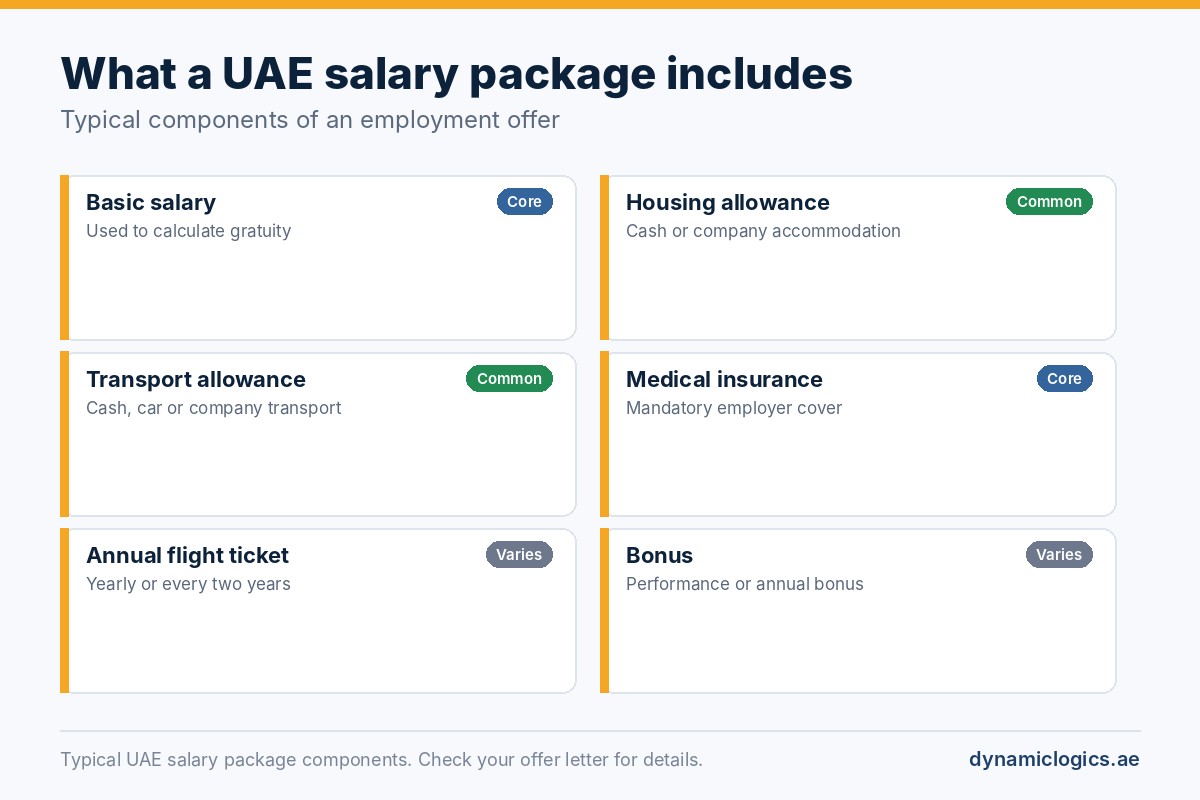
UAE salary packages are often split into a basic salary and allowances. Understanding this is important because some benefits, such as end-of-service gratuity, are calculated on basic salary.
| Component | What it covers |
|---|---|
| Basic salary | The core salary, used to calculate gratuity |
| Housing allowance | Cash allowance or company accommodation |
| Transport allowance | Cash allowance, company car or transport |
| Other allowances | Phone, education, utilities or cost-of-living allowances |
| Annual flight ticket | Return ticket to home country, often yearly or every two years |
| Medical insurance | Mandatory health insurance provided by the employer |
| Bonus | Performance or annual bonus, depending on the employer |
Employee rights under UAE labour law
- Working hours: generally up to 8 hours a day or 48 hours a week, with overtime paid above these limits.
- Annual leave: 30 calendar days per year after one year of service, with pro-rated leave for shorter service.
- Sick leave: paid and partially paid sick leave after probation, as set by law.
- Maternity and parental leave: statutory maternity and parental leave entitlements.
- End-of-service gratuity: payable on leaving, calculated on basic salary and length of service.
- Wage Protection System: salaries in many companies are paid through WPS to ensure timely payment.
- Unemployment insurance: employees subscribe to the national unemployment insurance scheme.
- No recruitment fees: employers must pay visa and recruitment costs.
Working week and hours
Since 2022, the UAE government has followed a Monday to Friday working week, with Friday afternoons often shorter. Many private companies follow a similar pattern, though some sectors such as retail, hospitality and healthcare work shifts, weekends and public holidays. Working hours are usually reduced by two hours a day during Ramadan in the private sector.
Work culture in the UAE
- Respect and courtesy: politeness, patience and respect for hierarchy are valued.
- Relationship building: trust and personal relationships matter in business.
- Multicultural teams: clear communication and cultural awareness are essential.
- Dress code: business attire is common; modest dress is expected in public.
- Religious respect: prayer times and Ramadan are respected at work.
- Punctuality and flexibility: punctuality is expected, while schedules can be flexible around business needs.
Cost of living
While salaries are tax-free, living costs, particularly rent and school fees, can be high in Dubai and Abu Dhabi. Sharjah, Ajman and Ras Al Khaimah generally offer lower rents. When comparing a job offer, consider housing, schooling, transport and healthcare costs, not just the headline salary.
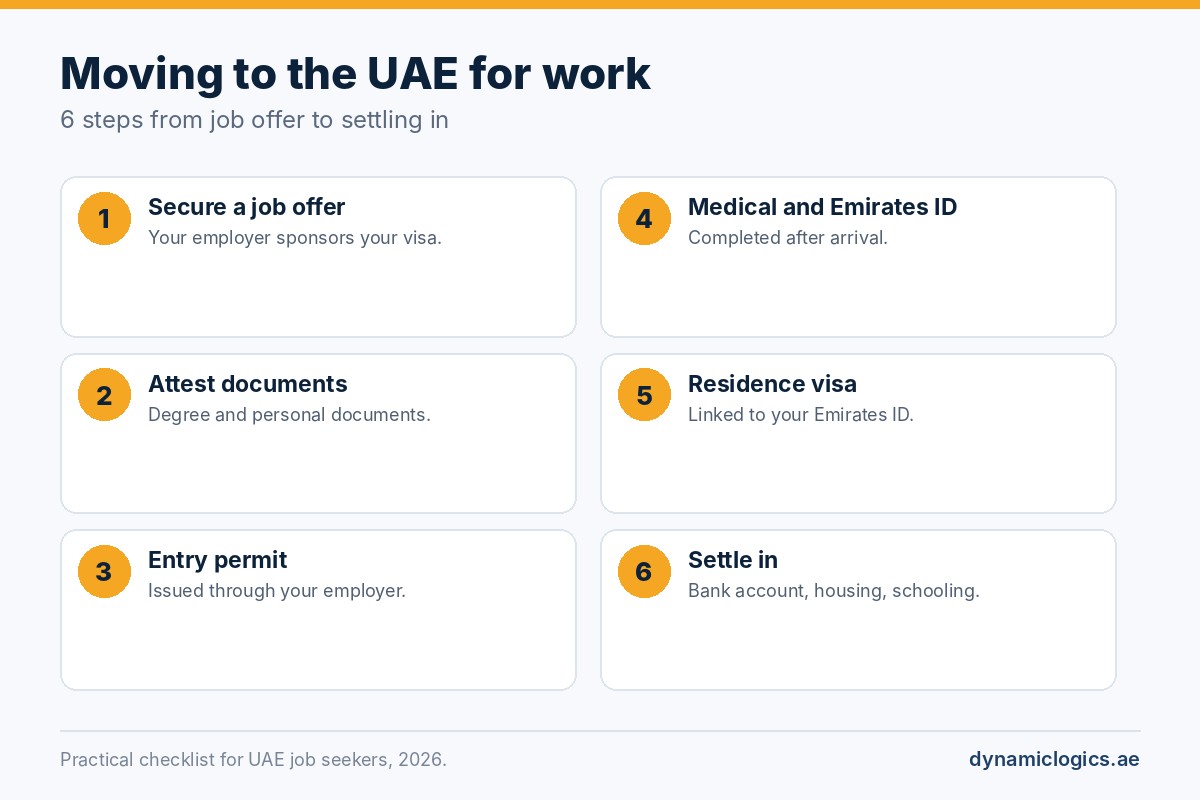
Moving to the UAE for work: step by step
- Secure a job offer: your employer sponsors your visa.
- Attest documents: degree and personal documents for UAE use.
- Get your entry permit: issued through your employer.
- Complete the medical test and Emirates ID: after arrival.
- Receive your residence visa: linked to your Emirates ID.
- Settle in: open a bank account, find housing and arrange schooling.
Frequently asked questions
Is working in the UAE worth it?
For many professionals, yes. Tax-free income, career growth, safety and lifestyle are major advantages, though living costs should be considered.
Do you pay income tax in the UAE?
No. There is no personal income tax on salaries in the UAE.
How many days of annual leave do UAE employees get?
Employees are entitled to 30 calendar days of annual leave per year after one year of service.
What are working hours in the UAE?
Generally up to 8 hours a day or 48 hours a week, with reduced hours during Ramadan in the private sector.
Final thoughts
Working in the UAE offers tax-free salaries, strong career opportunities and a safe, multicultural lifestyle. Understand your package, know your rights under labour law and respect the local work culture to make the most of your career in the UAE.
About the author
Farrukh Shahzad
Farrukh Shahzad is a content author at DLMC Consultants, part of a UAE-based corporate services group. He produces informative guides on employment, recruitment, HR and business practices in the United Arab Emirates.