 Written by Farrukh Shahzad · September 14, 2026
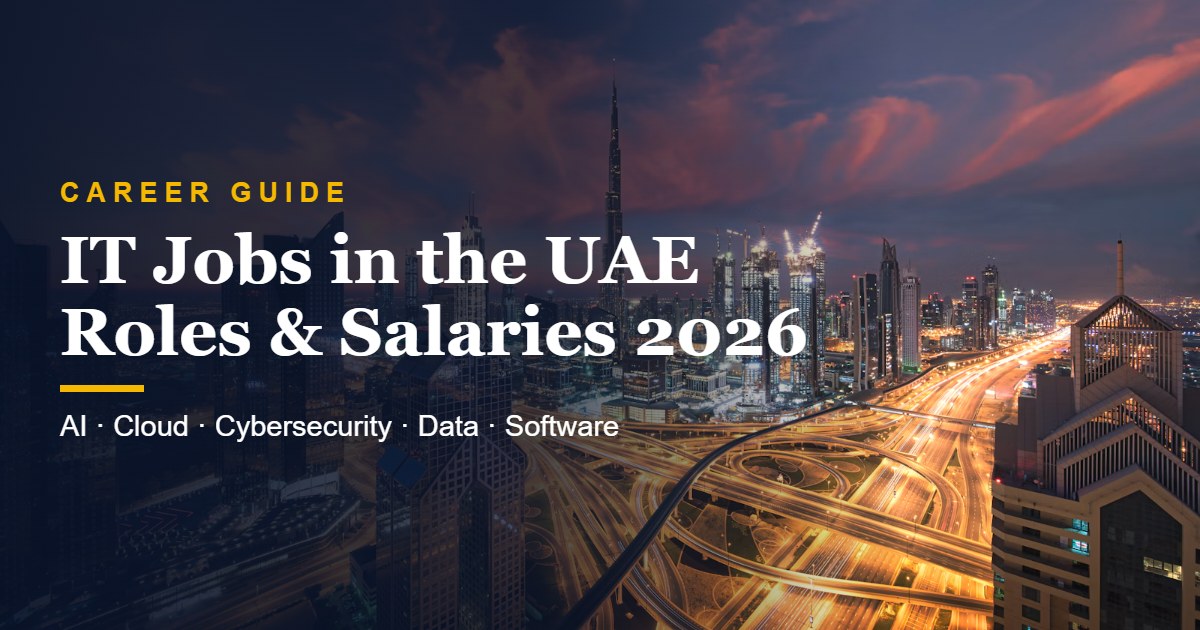
Information technology is one of the fastest-growing job sectors in the UAE. Government-led digital transformation, the national AI strategy, a booming fintech scene and large investments in data centres and cloud infrastructure mean that skilled IT professionals are in demand across almost every industry, from banking and healthcare to aviation, retail and government.
Whether you are a fresh computer science graduate, an experienced developer, or an IT manager considering a move, this guide covers the most in-demand IT jobs in the UAE in 2026, typical salaries, valuable certifications, where to find vacancies and how to apply successfully.
Why the UAE is hiring so many IT professionals
- National AI and digital strategies: the UAE was one of the first countries to appoint a minister for artificial intelligence, and its AI strategy aims to make the country a global leader by 2031.
- Digital government: Dubai and Abu Dhabi have moved most public services online, creating ongoing demand for developers, integration specialists and security experts.
- Fintech and digital banking: DIFC and ADGM host hundreds of fintech firms, and traditional banks are modernising their platforms.
- Cloud and data centres: global cloud providers have opened UAE data centre regions, and organisations are migrating workloads to the cloud.
- Cybersecurity regulation: stricter data protection and cybersecurity requirements are pushing companies to build security teams.
- Corporate tax and e-invoicing: businesses are upgrading ERP and finance systems, increasing demand for ERP consultants and developers.
Most in-demand IT jobs in the UAE
| Role | Key skills employers ask for | Demand level |
|---|---|---|
| AI / machine learning engineer | Python, ML frameworks, LLMs, MLOps | Very high |
| Data scientist / data analyst | SQL, Python, Power BI, Tableau, statistics | Very high |
| Cybersecurity analyst / engineer | SOC, SIEM, cloud security, incident response | Very high |
| Cloud engineer / architect | AWS, Azure, Google Cloud, Kubernetes, Terraform | Very high |
| DevOps / site reliability engineer | CI/CD, containers, automation, monitoring | High |
| Full-stack / backend developer | Java, .NET, Node.js, Python, React, APIs | High |
| Mobile app developer | Flutter, React Native, Swift, Kotlin | High |
| ERP consultant (SAP, Oracle, Microsoft Dynamics) | Functional modules, implementation, integration | High |
| Network and infrastructure engineer | Cisco, Fortinet, SD-WAN, data centre | Steady |
| IT support / helpdesk | Windows, Microsoft 365, ITIL, troubleshooting | Steady |
| IT project manager / product manager | Agile, Scrum, PMP, stakeholder management | High |

IT salaries in the UAE (2026)
IT salaries in the UAE vary by role, seniority, industry and employer type. Banks, government-linked entities and global tech companies usually pay at the top of the range. The figures below are typical monthly packages in AED and should be used as a guide only.
| Role | Junior (0 to 3 yrs) | Mid (3 to 7 yrs) | Senior (7+ yrs) |
|---|---|---|---|
| IT support / helpdesk | 4,000 to 7,000 | 7,000 to 12,000 | 12,000 to 18,000 |
| Software developer | 7,000 to 13,000 | 14,000 to 25,000 | 25,000 to 40,000 |
| Data analyst / data scientist | 8,000 to 14,000 | 15,000 to 28,000 | 28,000 to 45,000 |
| Cloud / DevOps engineer | 9,000 to 15,000 | 16,000 to 30,000 | 30,000 to 45,000 |
| Cybersecurity specialist | 9,000 to 15,000 | 16,000 to 32,000 | 32,000 to 50,000 |
| AI / ML engineer | 10,000 to 18,000 | 20,000 to 35,000 | 35,000 to 60,000 |
| IT manager / head of IT | n/a | 25,000 to 40,000 | 40,000 to 70,000+ |
Packages often include housing and transport allowances, medical insurance and annual flights, and there is no personal income tax on salaries. For more salary data across functions, see our UAE salary guide.
Top industries and employers hiring IT staff
- Banking and fintech: local and international banks, payment companies and digital banks.
- Government and semi-government: digital government authorities, utilities, transport and smart city programmes.
- Telecoms: national operators and their technology subsidiaries.
- Aviation and logistics: airlines, airports, ports and logistics groups.
- Healthcare: hospital groups digitising patient records and health systems.
- Retail and e-commerce: large retail groups, marketplaces and delivery apps.
- Technology companies: global tech firms, start-ups and IT service providers based in free zones like Dubai Internet City, Dubai Silicon Oasis and Hub71 in Abu Dhabi.
- Consulting and system integrators: Big Four technology practices and specialist integrators who deliver projects for clients.
Certifications that boost your chances
UAE employers place real value on recognised certifications, especially for overseas candidates whose previous employers may not be familiar to local hiring managers.
| Area | Valued certifications |
|---|---|
| Cloud | AWS Solutions Architect, Microsoft Azure Administrator / Architect, Google Cloud Professional |
| Cybersecurity | CISSP, CISM, CEH, CompTIA Security+, OSCP |
| Networking | CCNA, CCNP, Fortinet NSE |
| Data and AI | Microsoft Power BI Data Analyst, Azure AI Engineer, Google Professional Data Engineer, TensorFlow |
| Project and service management | PMP, PRINCE2, Scrum Master, ITIL 4 |
| ERP | SAP S/4HANA module certifications, Oracle Cloud, Microsoft Dynamics 365 |

How to find IT jobs in the UAE
LinkedIn and job portals
LinkedIn is the leading channel for tech hiring in the UAE. Recruiters search by skills and certifications, so list your tech stack clearly. Naukrigulf, Bayt, Indeed and foundit also carry many IT vacancies. Our guide to the best job sites in the UAE compares them.
Specialist IT recruiters
Many IT roles, especially contract, consulting and senior positions, are filled through specialist recruitment agencies. Register with agencies that focus on technology and keep in touch with the recruiters who place people in your niche.
Company career pages and start-up platforms
Banks, telecoms, airlines and government-linked companies post on their own career portals. For start-ups, check free zone and incubator job boards and platforms such as Wellfound.
Tech events and communities
Events such as GITEX Global in Dubai, developer meet-ups, hackathons and cloud community events are excellent places to meet hiring managers. Many UAE tech hires happen through referrals from these networks.
Applying from overseas
The UAE welcomes international IT talent, and many employers sponsor visas for experienced developers, engineers and specialists. To improve your chances from abroad:
- Attest your degree early, because your work permit is usually issued according to your qualification.
- Show your notice period and willingness to relocate clearly on your CV.
- Highlight experience with global platforms and enterprise clients.
- Keep a GitHub, portfolio or project links up to date.
- Be ready for remote technical assessments and video interviews.
Highly skilled tech professionals may also qualify for long-term options such as the green visa or golden visa. Read our step-by-step guide on how to find a job in the UAE as a foreigner for the complete process.
What IT interviews look like in the UAE
Most IT hiring processes in the UAE include an HR screening call, one or two technical rounds (coding tests, system design or scenario questions), and a final interview with the hiring manager. Larger employers may add a take-home assignment or a panel interview. Expect questions on your notice period, salary expectations and visa status.
Prepare to explain projects in business terms, not only technical terms. UAE hiring managers like to hear how your work improved speed, reduced cost, increased security or supported growth.
Tips to stand out
- Specialise: deep skills in AI, cloud, cybersecurity or data are worth more than a long list of basic skills.
- Quantify impact: for example, “reduced deployment time by 60%” or “migrated 120 servers to Azure”.
- Show regulated-industry experience: banking, healthcare and government experience is highly valued.
- Learn the local context: knowledge of UAE data protection rules and cloud residency requirements is a plus.
- Keep learning: employers want people who keep up with fast-moving areas like generative AI.
IT jobs by emirate
Where you work in the UAE shapes the type of IT role you are likely to find.
- Dubai has the largest number of private-sector tech jobs, with regional headquarters of global technology firms, start-ups, fintechs in DIFC, e-commerce companies, media groups and digital agencies. Dubai Internet City and Dubai Silicon Oasis are major tech clusters.
- Abu Dhabi is the centre of large government and sovereign-backed technology programmes, AI research, energy-sector digitalisation and fintech in ADGM. Hub71 supports a growing start-up community, and many AI and data roles are concentrated here.
- Sharjah offers IT roles in manufacturing, education, logistics and its own research and technology parks, often with lower living costs.
- Northern emirates such as Ajman, Ras Al Khaimah and Fujairah have smaller tech markets, mainly IT support, infrastructure and ERP roles in industrial, port and hospitality businesses.
Permanent, contract and freelance IT work
IT professionals in the UAE work under several arrangements, and it is worth understanding each before you apply.
| Type | How it works | Best for |
|---|---|---|
| Permanent employment | Direct contract with the company, visa sponsored by the employer, full benefits and gratuity | Long-term career growth and stability |
| Contract / outsourced | You are employed by a recruitment or outsourcing firm and assigned to a client project, often for 6 to 24 months | Project specialists, consultants, fast entry into large organisations |
| Freelance | Self-sponsored through a freelance permit or green visa, working for multiple clients | Experienced developers, designers and consultants with an established client base |
Contract and outsourced roles are very common in UAE banks, telecoms and government entities, and they are often a fast route into these organisations. Check how your visa, medical insurance, leave and end-of-service benefits are handled before you sign.
Career paths in UAE tech
The UAE tech market rewards people who grow into specialist or leadership roles. Typical paths include moving from IT support into systems administration, cloud engineering or cybersecurity; from developer to senior engineer, tech lead and engineering manager; from data analyst to data scientist, data engineer or analytics manager; and from technical roles into IT project management, product management or solutions architecture. Many organisations sponsor certifications and training, so ask about learning budgets during interviews.
Remote and hybrid IT work
Hybrid working is now common in UAE tech teams, especially at technology companies and multinationals, with many employers offering one to three remote days a week. Fully remote roles exist but are less common for UAE-based employers, who usually prefer staff to live in the country. If you want to live in Dubai while working for a company abroad, the remote work visa is designed for that situation.
How to negotiate an IT salary in the UAE
Salary negotiation is normal and expected in the UAE. Research the market rate for your role and seniority before the first interview, and always discuss the total package rather than the basic salary alone. Ask how the package is split between basic salary and allowances, because your end-of-service gratuity is calculated on basic salary only. If the employer cannot move on salary, negotiate other benefits such as a sign-on bonus, a higher housing allowance, certification and training budgets, extra annual leave, hybrid working days, family medical cover or relocation support. For in-demand skills such as AI, cloud and cybersecurity, candidates with competing offers are often in a strong position, so be confident but realistic.
Frequently asked questions
Is there demand for IT jobs in the UAE?
Yes. IT is one of the strongest hiring areas in the UAE, with especially high demand for AI, data, cloud, cybersecurity and software engineering skills.
What is the average IT salary in Dubai?
Most mid-level IT professionals in Dubai earn between AED 14,000 and AED 30,000 per month, while senior specialists and managers can earn AED 35,000 to AED 70,000 or more.
Can freshers get IT jobs in the UAE?
Yes, especially in IT support, junior development, QA testing and data analysis. Certifications, internships and a strong portfolio help freshers compete. See our guide to jobs in the UAE for freshers.
Which IT skill is best for the UAE market?
AI and machine learning, cloud engineering and cybersecurity are currently the most valuable, followed by data analytics and full-stack development.
Do I need Arabic for IT jobs in the UAE?
No, English is the working language for almost all IT roles. Arabic can help in government projects and customer-facing roles but is rarely required.
Final thoughts
The UAE offers IT professionals strong demand, competitive tax-free salaries and the chance to work on large, modern digital projects. Focus on in-demand specialisations, back your experience with recognised certifications, and use LinkedIn, specialist recruiters and tech events to reach hiring managers directly.
Hiring IT talent or looking for your next tech role? Browse our current vacancies or contact DLMC Consultants.
About the author
Farrukh Shahzad
Farrukh Shahzad is a content author at DLMC Consultants, part of a UAE-based corporate services group. He produces informative guides on employment, recruitment, HR and business practices in the United Arab Emirates.